Monday, April 15, 2013

Figurative Language


                A simile is defined as a figure of speech of comparing two things with the use of “like” or “as”. A same metaphor is basically the same thing. It is a figure of speech comparing to things without the use of “like” or “as”. (Wikipedia)

Similes

1. “...my hand, it just clamps shut like the Jaws of Life”(pg 9)

2. “...it’s hibernating under her skin like a bear, until it decides to roar again” (pg 10) 

3. "Kate, as usual, has swapped so that she has all the funchy ones that don't feel like rocks under               your neck." (pg 14)

4. "Vern's face is like a soufflé, caving in at the most unexpected places". (pg 59)

5. "They come in  like a hurricane".(pg 62)


Metaphors

1. “She has long dark hair and the  fine collarbones of a princes” (pg 11) 

2. “He’s got black hair and he’s at least as tall as my dad-six feet- with a right angle jaw and eye that look frozen over”.  (pg 19)

3. "When she is tied to the bed, I am her eyes and ears". (pg 58)

4. "The four-hour surgery isn't a walk in the park" (pg 59)

5. "My cheeks are on fire" (pg 60)


                  The use of figurative language like similes and metaphors effect the story because they give the reader a perspective about what the character is like. It also requires them to think a little and figure out what is happening in that scene. The reader may also get exited when he or she reads it because it is better than coming right out and saying exactly what is happening or what the character is like. Similes and metaphors can replace boring adjectives and make the story a bit more interesting and enjoyable for the reader.




Tuesday, April 9, 2013

Are you somebody's keeper?


       If I had to pick who I acted as a keeper for it would one of my friends. We have been friends for quite some time and are always looking out for each other. We make sure that each other is in line whether it would be for school, sport, or anything else. Being and having a keeper is great because you know that if you mess up there will always be someone there to pick you up and help you though it.

My Sister's Keeper


                My Sister’s Keeper is a novel written by Jodi Picoult. It takes place in a fictional town of Upper Darby, Rhode Island, in 2004. The two sisters in this book are Kate Fitzgerald and the younger one Anna Fitzgerald. Kate is suffering from acute promyelocytic leukemia, a type of blood and bone marrow cancer. Anna was born so she could be available to give parts to Kate when she needed them. Anna was usually willing to give her sister what she needed but at age thirteen they need her to donate a kidney to Kate. It was possible that the transplant would fail, leaving both of them with only one kidney.  Anna wants control over her own body and seeks out a lawyer, Campbell Alexander, to help her reach medical emancipation. Her mother is an ex-lawyer and tries to fight their case so her daughter Kate can continue to get the attention she needs. My expectations for this novel are indifferent. People say that is is not a good book but I think that there is more to it then what people think. I hope that after I am done reading this book that I learn a valuable lesson and also enjoyed reading it.                                            


Citations 
Work:       "My Sister's Keeper (novel)." Wikipedia. Wikimedia Foundation, 04 Sept. 2013. Web. 09 Apr.      2013.

Picture:     "Offsite Event Jodi Picoult Signs THE STORYTELLER at Congregation Beth Israel | The    Poisoned Pen Bookstore." The Poisoned Pen Bookstore. N.p., n.d. Web. 09 Apr. 2013.


Wednesday, March 6, 2013

My Escape Into the Wild


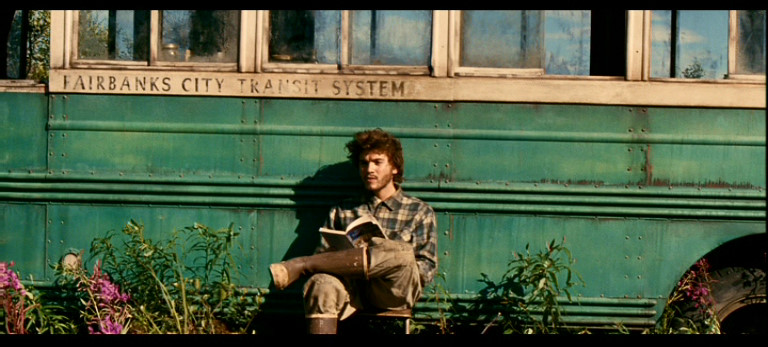
                I think that I would like to try going into the wild for a period of time. It would be nice to escape from civilization to be by yourself for a little. Even thought that Chris and the others mentioned in the book may have suffered a bit, I think their adventures were well worth it. My reasoning for this is because what they did was their dream and all they were doing was making it a reality. They took the saying “follow your dream” to a whole new level and I personally respect them for it. I would like to try a wilderness retreat because I think I would be able to survive for a little while and if it turned out that I was unable, then I would just go back to civilization unlike Chris did. If I were going into the wild I would most likely choose a place that was warmer then Alaska. It would be easier to survive in that type of environment where there would be more animals and plants to eat and you wouldn't have to worry about freezing to death. One thing that I would be escaping from would be the crowded civilization. It would be nice to get away from everybody. After a while I would miss human companionship. It might get boring after a while without human interaction.  Another thing I would be escaping and would not miss is all the crime caused by people. Although I would love to go into the wild and just be by myself, I would eventually have to go back to civilization. I would miss other people too much. 

Into The Wild Introduction

Adventuring Into The Wild
Andrew 
English Project 
Into the wild is a non-fiction book about a young man who hitchhiked to Alaska. Annandale Virginia is where the main character, Chris McCandless, grew up. In April 1992 he hitchhiked to the Stampede Trail in Alaska. He was a very intelligent young man and graduated from Emory University with high grades. After graduating Chris donated $25,000 dollars to charity and began to travel in his car. On September 6, 1992, his body was found inside an old bus that was in Alaska. John Krakauer began to trace the steps that Chris took that eventually lead to his death. Chris got rid of his legal name and called himself “Alexander Supertramp”. He spent some time in Carthage, South Dakota, where he work in a grain elevator owned by a man with the name Wayne Westernberg. Krakauer suggest that Chris was influenced by the words of Henry David Thoreau and his favorite writer, Jack London. Once he got to Alaska he survived about 119 days in the wilderness.

Thursday, February 14, 2013

Yellowstone


Yellowstone
            If I was allowed to visit any place in the United States I would pick Yellowstone National Park in Wyoming.  The main reason I would want to go there is because I love the outdoors and would much rather be outside than inside a cramped city. Before I could go here I need to look into the travel information to find out what it takes to get there and what it will cost. If I flew there a Southwest airplane ticket cost about $70 but I would need to get back so it would end up at about $140. I also would have the choice of driving there. Maryland and Wyoming are about 1,892 miles apart so depending on the gas mileage of the car the price of travel varies. Once there, I would have to rent a lodge in Yellowstone. It would be idle to go in the summer because in the winter Yellowstone is often covered in snow and very cold.
            Yellowstone is known for many things. For one the vast number of different animals that make their home on the grounds. It is also very popular for its natural water geysers and one of the most popular, Old Faithful, is a huge tourist attraction. Another thing is known for is that Yellowstone Park sits right on top of a super volcano that, if exploded, could be up to ten times worse than Mount St. Helens. The only things I would take on this trip would be some extra cloths, a good pair of shoes, and a fishing rod.
            There are numerous things I would want to do if I went to Yellowstone. The first thing I would want to do is fish. I would love to go around to different streams and ponds and just see what types of fish are in there. Next I would want to go hiking around and camp outside. Another thing that would be fun would to go bicycling. I would just enjoy going sightseeing around because Yellowstone is such a beautiful place. The last thing I would want to do is to try and see all the animals and maybe even try to take a tour of the whole Yellowstone Park and see everything it contains.
            Visiting Yellowstone would be dreams come true for me. To be in a outdoor area as big as Yellowstone would be amazing. There is just so much to do I would never want to leave. I would take a lot of pictures so I could always remember my trip to the great outdoors.


Wednesday, February 6, 2013

Transformation Essay


Transformation in A Midsummer Night’s Dream
                             William Shakespeare uses transformation as a way to change certain things in his play. The word transformation is defined by Dictionary.com as “A change in form, appearance, nature, or character. Shakespeare uses transformation to display change in his play. He uses it to shift your view from one point to another.
                             Bottom, love, and power are all examples of how Shakespeare uses transformation in A Midsummer Night’s Dream. This is Snout seeing Bottom for the first time with the head of a donkey.  Snout exclaims, “O Bottom, thou art changed! What do I see on thee?” (Shakespeare 3.1.111-117) Puck uses his magic to transform Bottom to a head of an ass. This is ironic because Bottom can sometimes act like a jerk. Robin also says, “On the ground sleep sound. I apply to your eye, gentle lover, remedy.”(3.2.477-481)This is when Robin is putting the potion on Lysander’s eyes. When he does this he transforms Lysander’s point of view when it comes to who he loves. The first person he sees is who he loves. Shakespeare uses the general concept of power to show that the fairies are more dominate than the humans. The fairies are able to transform the humans in both mental and physical ways. They were able to transform Lysander and make him love someone else as well as being able to transform Bottom so he had the head of a donkey. They were also able to fix him and turn him back. This shows that the fairies have more power. You could say that the power has transformed for the humans to the fairies. Though out A Midsummer Night’s Dream, Shakespeare uses Bottom, love, and power as examples of transformation.
                             There are many cases of transformation in the modern world. One example of transformation is gene splicing. This is where you can take DNA from one organism and put it into another to transform it. Scientist can make a lot of strange thing by doing this. They would be able to make glowing mice by taking the DNA of something that glows and splicing it into the DNA of an ordinary mouse. The mouse would basically transform into something new. Another form of transformation is bribery of powerful people or really any person for that matter.  You could bribe someone usually with money to make them do something that you want. For example somebody could bribe the president with a whole bunch of money so he would change a law or something else. That president’s view on the subject would be transformed so he would look at it in a different way.  The last example of transformation is ageing. Nobody stays young forever and when you age in a way you transform for stage to stage. You start off as a baby crawling around then as you get older your body transforms and be could stronger making you able to walk on two feet. Then as the years go by your body may go though some other forms of transformation such as growing taller and then well your even older you may start to shrink. These are all examples of transformation in modern life.
                             Transformation can appear though various situations. The prime connection transformation, A Midsummer Night’s Dream, and modern day are though power. Power is shown by the fairies in the book, and it is shown though ranks of authority in modern day. The fairies display it by showing the have power over human emotions, such as love, and  modern day people show it by being promoted to a higher level and therefore having more control. All of the examples in the book prove that Shakespeare uses transformation.
                                                                                                     
            Work Cited
Shakespeare, William. A Midsummer Night’s Dream. Ed. Barbara A. Mowat and Paul Werstine. New York: Washington Square P, 2003.

"Transformation." Dictionary.com. Dictionary.com, n.d. Web. 05 Feb. 2013.